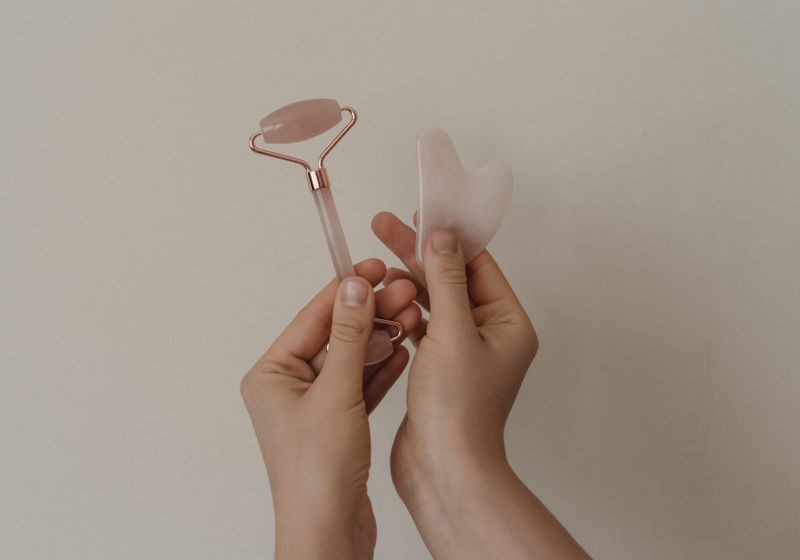
I want to write to you about gear for the home spa. I have been thinking about it again this week — three of the bodies that arrived at the small amber-lit room where I work came in carrying the same small weather, and the practice we returned to in all three sessions was, in different forms, the same. The small inventory that turns a bathroom into a place rituals happen — body brush, gua sha, a few cloths. That is what the work looks like when it is given properly.
What it is not is buying everything; the small shelf used daily beats the crowded one used occasionally. I see that version a great deal — clients arrive having read about the practice somewhere and having taken from it the wrong thing. The version that works is quieter than the version they are expecting. An afternoon to set up; years of use afterwards. That is the practical part. The rest of this letter is what I have learned about the part that is not practical, and the small details that change a session from theatre into something useful.
What you can expect from the practice
What the practice produces, in the body of someone who keeps to it, is this: the practice becomes possible because the tools are already in place; nothing has to be summoned. That is the change I would describe as honest. Not transformation. Not the language of the magazines. A quiet and reliable change in how the body sits, and how it answers what is asked of it.
In my experience the first session, or the first week of a daily home practice, will rarely show much. By the second the body has begun to know what is being asked. By the third it has accepted the offer and the small changes have started to compound. I would not judge any of these practices until you have given them at least a month of honest use.

The way it tends to go in practice
The practical structure is: an afternoon to set up; years of use afterwards. What you need is small — body brush, gua sha stone, two muslin cloths, and a small wooden tray — and the room only has to be quiet. I prefer warm light, dim if possible. If you are doing the practice yourself at home rather than receiving it at a studio, the small architecture is the same — a few minutes to settle in, the practice itself, a few minutes to settle out.
What most often goes wrong in the home version is the after-phase. The practice ends and the person stands up immediately and resumes their evening. The body, asked to rejoin the day before it has finished settling, loses most of what the practice was beginning. Give the after-phase its five minutes. The whole hour multiplies from that small attention.
The mistake most people arrive with
Almost everyone who comes to gear for the home spa for the first time arrives with the same wrong idea: buying everything; the small shelf used daily beats the crowded one used occasionally. I do not blame them — the version of the practice that has been sold to them is louder than the version that works. But part of the first session, or the first month of home practice, is letting that wrong idea quietly fall away.
Once it has fallen away, the practice becomes available in a way that the loud version never quite allows. The body stops bracing against an effort that does not need to be made. The practice settles into the smaller, slower thing it actually is. From there, the work it does is real.
What the practice gives is small and real. The practice becomes possible because the tools are already in place; nothing has to be summoned. That has to be enough — and once you let it be enough, it usually is.
That is most of what I have to say about gear for the home spa for now. If you are starting from scratch, give it a month of patient practice before you judge it. The first week will feel like very little. The fourth will feel different in a way you can recognise without prompting. Write to me from your bathroom or your evening if it helps. The room is here when you come back through this part of the world.